
Nocturia (Frequent Urination at Night) is very common in men and women, and is not confined to older people.3-5 Some patients and certain healthcare professionals incorrectly consider nocturia to be a natural part of ageing. Partly because of this misperception, nocturia is often poorly diagnosed and under-treated. Nocturia becomes more common with age, but can occur at any age.
Impact of Frequent Urination at Night
Nocturia can cause sleep deprivation, which is associated with poor daytime functioning, memory impairment, poor cognitive performance and absenteeism. Chronic sleep deprivation may weaken immune responses and increase the risk of cardiovascular disease, anxiety, depression and type 2 diabetes.
The risk of mortality was 91% greater in elderly people with nocturia (after adjusting for age, gender, diabetes, smoking, history of coronary disease, renal disease and stroke, tranquilizers, hypnotics and diuretics) compared with those without nocturia.
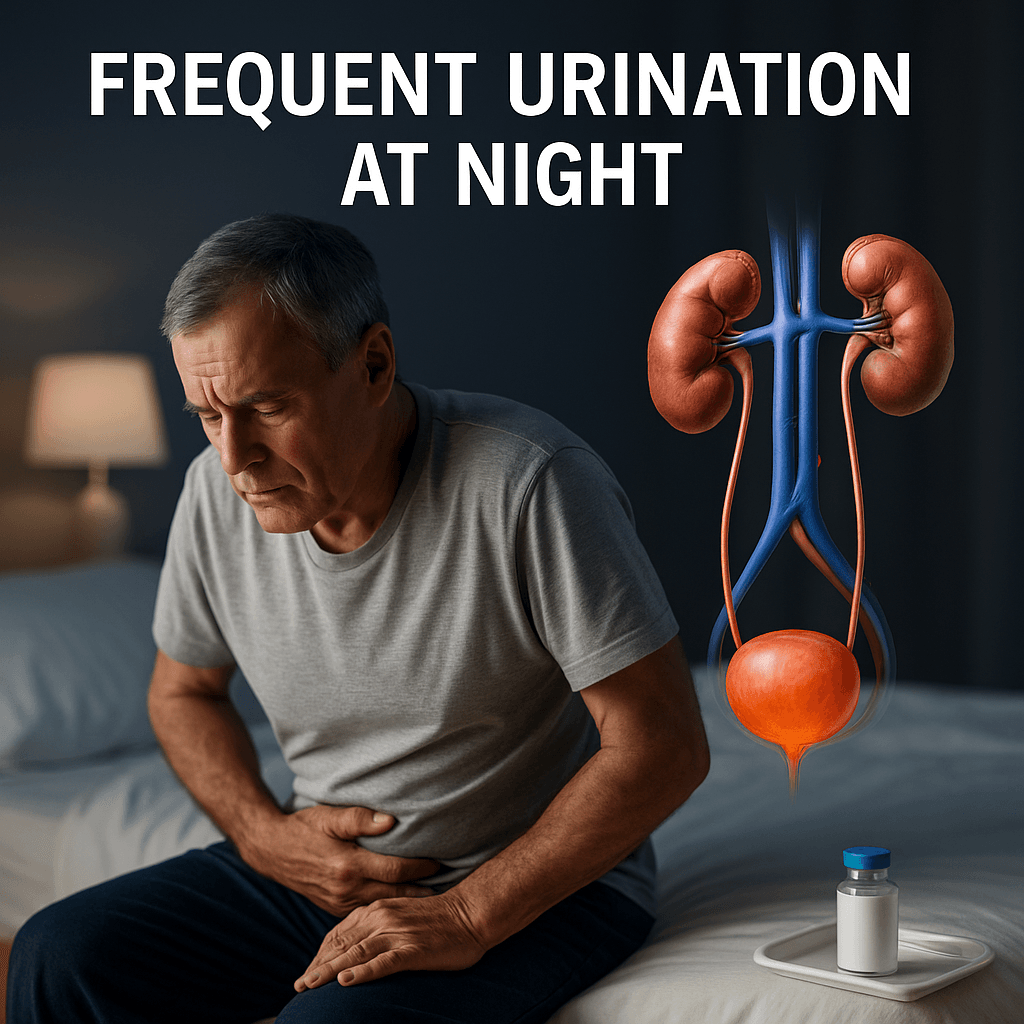
Cause of Nocturia (Frequent Urination at Night)
Nocturia is a syndrome rather than a diagnosis. In men, benign prostatic hyperplasia (Enlarged Prostrate) is the main cause of nocturia. In women, childbirth, menopause and pelvic organ prolapse are the main causes of nocturia.
Common causes of nocturia in both sexes are:
- Behavioural patterns
- Concomitant drugs (eg diuretics)
- Excessive fluid before bedtime
- Oedema of the lower extremities
- Nocturnal polyuria
- Overactive bladder
- Reduced bladder capacity
- Several underlying medical causes

Crucial Nocturia Screening Questions You Need to know
- Do you get up at night to urinate?
- Does it bother you to have to do this?
- Do you pass a large volume of urine?
- Is there urgency, in that you have to rush to the loo?
- Do you also urinate frequently during the day?
- At your first morning visit, is your urine dark and concentrated of pale and dilute?
Behavioral Therapies to Combat Nocturia
Initial management focuses on the underlying cause(s) of frequent urination at night and lifestyle modifications, including:
Fluid management
- Fluid intake should be about 24 ml of water per kg bodyweight a day.
- Avoid caffeine, alcohol and carbonated drinks, especially diet drinks. Artificial sweeteners may irritate the bladder.
- Food is an important source of fluid.
Dietary management
- Restricting salt intake helps manage hypertension and may help with nocturia associated with salt diuresis.
- In general, salt intake should not exceed 6g (2.4g sodium), which is about one teaspoon. Processed foods and ready meals are often high in salt (see labelling on packaging).
- You may benefit from eating their main meal early in the day
Good sleep hygiene, including avoiding drinking fluids after 7pm
Polypharmacy: consider whether concomitant medications may contribute to frequent urination at night
Medication That Help You Stop Waking to Urinate
Underlying causes for frequent urination at night should be looked for and addressed. Only if no underlying cause is found and lifestyle modifications have been made as appropriate should a diagnosis of idiopathic nocturnal polyuria be presumed, which could warrant a trial of pharmacological treatment.

Desmopressin lyophilisate (Noqdirna® 25 and 50 micrograms oral lyophilisate) is the only licensed product for all adults with idiopathic nocturnal polyuria (Passing large volumes of urine during the main sleep period, assessed by keeping a bladder diary) including those older than 65 years of age.
Desmopressin is a synthetic analogue of naturally occurring anti-diuretic hormone arginine vasopressin (AVP). Desmopressin
mimics vasopressin’s anti-diuretic effect, binding to the V2 receptors in the renal collecting tubules of the kidneys, causing
reabsorption of water into the body.
Continued therapy must be carefully reconsidered in elderly patients who show no evidence of therapeutic benefit beyond
3 months.
Desmopression is contraindicated in people with moderate and severe renal insufficiency (creatinine clearance (below 50 ml/min)
Creatine clearance | A measure of how much of a waste product called creatinine your kidneys remove from your blood over a set time (usually 24 hours).